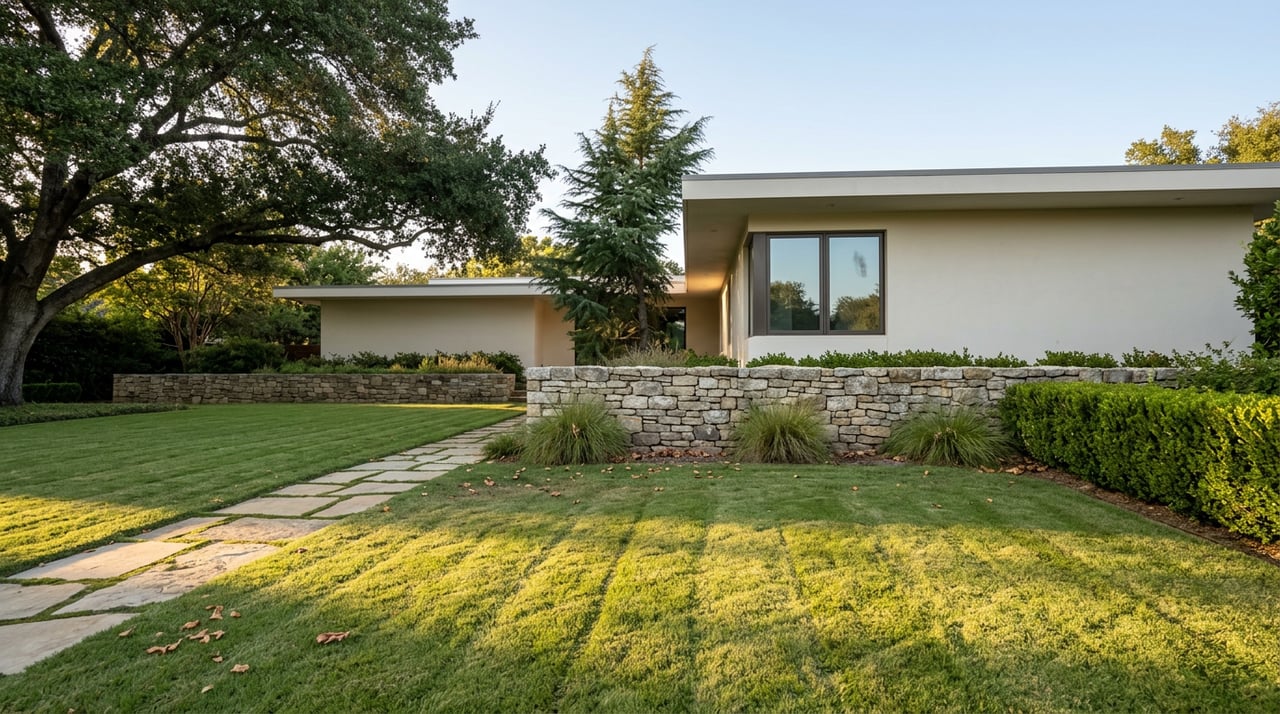
Hillsborough Real Estate Market 2026: Beyond the Median
August 20, 2026
August 20, 2026
Two data points from early 2026 make the case better than any argument could. In the three months ending in April, homes in Hillsborough Heights sold at a median of $10.9 million, up 67.6 percent year over year. In January, homes in Hillsborough Hills, a short drive away and inside the same town limits, sold at a median of $5.2 million, down 21.1 percent. Same town. Same schools. Same half hour to San Francisco. Opposite headlines.
Nothing about Hillsborough Hills got worse and nothing about Hillsborough Heights suddenly got better. What changed is which handful of houses happened to close escrow in a given window. When a market sells this few homes, the median stops being a measurement and starts being a coin flip weighted by whichever estates traded that month.
A 12-acre Hillsborough estate that came onto the market in February 2026 has sold for $70 million, the highest home sale recorded in Hillsborough's history and the highest in Northern California so far this year, according to ABC7 News. The property took six years and 110 subcontractors to build and includes a main residence, a guest house, a sports pavilion with a sunken tennis court, and an amphitheater. Listing agent Jenn Gilson said the buyer works in artificial intelligence and that location was a deciding factor. The sale doubles the previous town record of $35 million, set in 2022.
That single transaction is a useful stand-in for how thin this market really is. Redfin recorded 39 homes sold in Hillsborough in May 2026. San Mateo County as a whole sold 577 homes in June of the same year. Divide Hillsborough's transactions across three or four distinct sub-neighborhoods and you get sample sizes in the single digits for any given month. A $70 million outlier, or even a $10 million one, does not get averaged away in a pool that small. It becomes the pool.
This is not a Hillsborough quirk so much as basic statistics colliding with a real place. A median needs enough transactions for the outliers to cancel out. San Mateo County has that volume. Hillsborough does not.
| Area | Window | Median sale price | Change vs. year prior |
|---|---|---|---|
| Hillsborough, town-wide | 3 months ending May 2026 | $7.1 million | +33.4% |
| Hillsborough Heights | 3 months ending April 2026 | $10.9 million | +67.6% |
| Hillsborough Hills | January 2026 | $5.2 million | -21.1% |
The town-wide figure also carries an average of 11 days on market and a sale-to-list ratio of 103.5 percent, with 55.4 percent of homes selling above asking. Those numbers describe genuine demand at the high end. They do not describe a market where every seller can expect the same outcome, because the underlying pool is too small to produce a reliable average in the first place.
Widening the lens helps calibrate what's actually happening here versus what's happening across the Peninsula's estate tier generally. Redfin's March 2026 figures for five comparable markets:
Hillsborough sits in the middle of that price range but at the fast end of the speed range. That combination, high price with unusually quick turnover, is another symptom of thin volume rather than uniform buyer urgency. A handful of well-prepared, flat-land listings can close in under two weeks and pull the whole town's average down with them, while a compromised or oddly configured property sits for months without moving the headline number much at all.
Once you understand why the median is noisy, the next question is what actually sets price in a market like this. The answer is land, and the reason traces back to a zoning decision from 1953.
Hillsborough has required a minimum half-acre lot size since that year, with additional requirements for sloped parcels, and the town's current housing plan through 2031 centers new capacity on accessory dwelling units and town-owned sites rather than any rezoning of private property. The town also owns 259 acres of open space that cannot be developed or sold. Put together, this means the supply of large, buildable, flat parcels in Hillsborough is essentially fixed. It cannot expand the way inventory expands in a market with looser zoning.
That scarcity shows up directly in recent sales. In the entry tier of Hillsborough's estate market, a 2,770-square-foot home on 915 Link Road sold for $4.55 million on a half-acre lot, and a 3,370-square-foot home on 965 Parrott Drive sold for $4.699 million on a 0.43-acre lot. Move up to the core estate tier and the relationship between house size and price gets more interesting. A 7,285-square-foot home on 760 Chateau Drive sold for $6.688 million on a 0.66-acre lot. A smaller home, 6,780 square feet, on 75 Eugenia Way sold for $8 million because the lot was 0.88 acre.
The larger house sold for less. The larger lot sold for more. That single comparison tells you more about how Hillsborough actually prices property than any square-footage chart could.
If you're weighing Hillsborough against Atherton, Woodside, or Los Altos Hills, or trying to make sense of a specific listing inside Hillsborough itself, a few adjustments to how you read the numbers will serve you better than the headline median:
Treat neighborhood-level medians as directional, not precise, until you can see the underlying sale count. A 67 percent swing in one sub-area and a 21 percent drop in another, in the same town, in the same year, is a sample-size story first and a market-conditions story a distant second.
Weight lot quality before square footage. Flat, usable, private land is the scarce input here, and the Chateau Drive and Eugenia Way comparison shows why a smaller house on a better lot can outprice a larger house on a lesser one.
Use days on market as a range, not a single expectation. The 11-day town-wide average includes both estates that moved in under a week because they were flat, private, and well-priced, and others that took considerably longer because the site itself was harder to sell.
If you're comparing Hillsborough to nearby towns, remember that Atherton's higher median and longer average marketing time, or Los Altos's lower median and faster pace, reflect different supply structures, not simply different levels of desirability.
For a closer look at how these dynamics play out street by street, our Hillsborough neighborhood guide breaks down the town's distinct pockets in more detail, and our team can walk through a complimentary home valuation that accounts for lot utility rather than relying on a single town-wide number.
Does an 11-day average days-on-market mean I need to make an offer in a weekend? Not necessarily. That average blends fast-moving, flat-land listings with others that take much longer. A property's actual marketing timeline depends heavily on its lot, not the town-wide figure.
Does a bigger house always cost more in Hillsborough? Not based on recent sales. The 760 Chateau Drive and 75 Eugenia Way comparison shows a smaller home on a larger lot selling for more than a larger home on a smaller one.
Can a smaller Hillsborough lot still accommodate a guest house or ADU? Hillsborough's current housing plan centers much of its new capacity on accessory dwelling units, and many half-acre lots can support one, though design review and permitting requirements apply to most changes on the property.
Numbers describe a market. They rarely explain one. If you're trying to figure out what a specific Hillsborough address is actually worth, or how to compare it fairly against Atherton, Woodside, or Los Altos Hills, The Laugesen Team can walk you through the lot-level factors that the headline median leaves out. Request a complimentary market and home valuation and we'll show you the math behind the number.

At The Laugesen Team, we use our expertise and commitment to guide you toward the best possible outcome. Let’s begin your journey today.