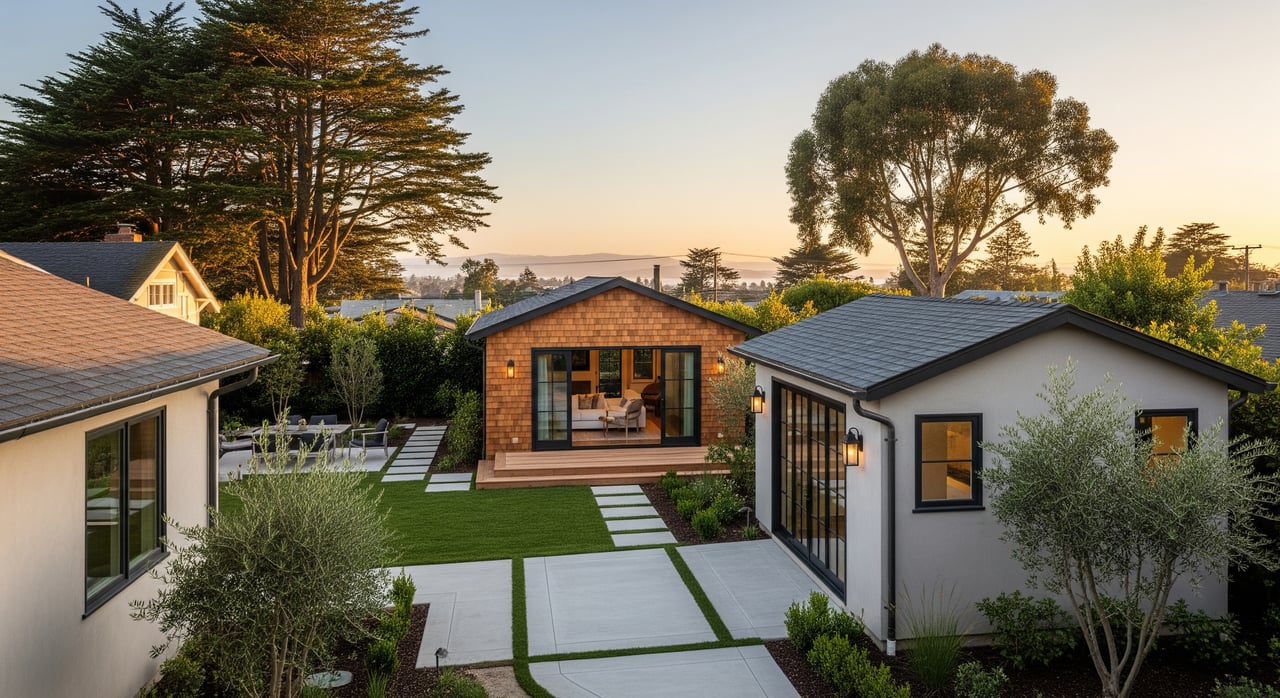
Thinking about creating rental income, space for family, or long-term value on your San Mateo property? With California’s SB 9 and the state’s ADU laws, you may be able to add a second home, build an accessory unit, or even split your lot — all through a streamlined, ministerial process if you meet objective standards. The rules are clear at the state level, but local details and site conditions drive what is actually possible on your parcel.
In this guide, you’ll learn the basics of SB 9 lot splits and duplexes, how ADUs work, what makes a site eligible, and the typical process and timeline in San Mateo. You’ll also get practical planning tips and who to consult before you invest. Let’s dive in.
SB9 and ADUs at a glance
SB 9 is a California law that allows up to two residential units on many single-family parcels and offers a one-time lot split in qualifying single-family zones, subject to objective criteria and some exclusions. Approvals are designed to be ministerial if you meet those standards.
ADU laws require cities to approve accessory dwelling units and junior ADUs ministerially in most single-family zones, using clear, objective rules such as size caps, parking rules, and limited fees. ADUs are a separate path that can sometimes be paired with SB 9 strategies on the same site.
Local rules still matter. San Mateo implements SB 9 and ADU approvals through local objective standards and checklists. Site-specific factors like utilities, access, and environmental overlays often determine feasibility.
Why this matters in San Mateo
San Mateo sits in a high-demand Bay Area market where a small, well-designed unit or a compliant lot split can meaningfully boost property value and cash flow. At the same time, local implementation, site shape, trees, utilities, and zoning overlays can limit what you can do. A quick early feasibility check saves time and cost.
Eligibility basics in San Mateo
Here are common factors that affect whether SB 9 or ADUs are possible on your property:
SB9 eligibility factors
- Parcel and zoning: Applies to many single-family zoned parcels. Parcels with multi-family, commercial, or institutional uses generally do not qualify.
- One-time split: You can split an eligible lot once to create two parcels.
- Common disqualifiers: Historic districts or landmarks, very high fire hazard areas, wetlands or habitat overlays, enforceable conservation restrictions, or lack of required access/frontage.
- Infrastructure capacity: Insufficient sewer or water capacity, or inability to meet access and turnaround standards, can block approval.
- Objective standards: You must meet local setbacks, height limits, lot coverage, and other objective design rules for ministerial approval.
ADU-specific eligibility
- Most single-family lots can add one ADU plus one JADU if you meet objective standards.
- Size caps and form: State law allows generous maximums, often up to 1,200 square feet, with local height and setback rules layered on.
- Parking: Many ADUs qualify for parking exemptions, such as near transit or when converting existing space. Where parking is required, local placement and size standards apply.
- Fees: Impact and connection fees are limited by state law for smaller ADUs, but you should still plan for proportionate utility and permit costs.
Title, CC&Rs, and HOAs
- Some CC&Rs and HOA rules affect exterior changes or additional units. State law limits certain restrictions, but HOAs can still apply conditions. Review your documents and consult counsel if needed.
Lot split and duplex basics
SB 9 creates two key paths on eligible single-family parcels:
- Duplex path: Up to two residential units on a single lot, subject to objective standards.
- Lot split path: A one-time split of the original parcel to create two lots, each eligible for housing that meets local rules.
Local screening is critical. Historic protections, wildfire risk areas, wetlands or habitat overlays, and access or frontage constraints can disqualify a site. Utility capacity and sewer connections also factor into approval and costs.
ADU rules you should know
- One ADU plus one JADU: Many San Mateo single-family lots can support both, if you meet objective standards.
- Setbacks and height: Local codes set clear, objective setbacks and height limits. These standards apply whether your ADU is detached, attached, or a conversion.
- Parking: State law provides key parking exemptions, especially near transit and for conversions. If parking is required, confirm local stall dimensions and placement.
- Ministerial review: If your ADU meets objective rules, the city approves it without discretionary hearings.
Process and timeline
Every site is different, but this is the typical flow:
1) Front-end due diligence (1–4+ weeks)
- Pull title and review easements and CC&Rs. Confirm no prior SB 9 split.
- Check zoning, overlays, and eligibility with the City of San Mateo.
- Verify sewer, water, storm drainage, and any connection or capacity limits.
- Schedule a pre-application meeting with Planning and Building.
2) Design and application (4–12+ weeks)
- Prepare site plans, floor plans, and elevations. For a lot split, assemble the submittal per the city’s checklist.
- For an ADU, prepare building plans for ministerial review.
- Some projects require recorded covenants or utility district annexations. Confirm early.
3) Review and approval (weeks to a few months)
- Ministerial projects that meet objective standards can be processed by staff without hearings.
- If your site triggers environmental or historic review, expect longer timelines.
4) Permitting and construction (permits 2–12+ weeks; build months to a year+)
- Pull building, electrical, plumbing, and utility permits.
- Build timelines vary widely by project type and site conditions.
- Secure final inspection and a Certificate of Occupancy before renting.
5) After approval
- Record any required affidavits or covenants.
- Notify utilities, update insurance, and consult the County Assessor about tax impacts.
Planning and design tips
- Site constraints: Lot geometry, trees, slopes, and existing structures drive what fits and where. Start with a measured site plan.
- Utilities: Confirm sewer lateral capacity and any replacement requirements before finalizing your layout.
- Access and fire safety: Driveway width, fire department access, and turnarounds can shape design for new detached units.
- Objective standards: Expect to meet local setbacks, height, lot coverage, and daylight plane rules.
Costs, financing, and returns
- Bay Area costs: Foundation work, utilities, site work, and fire/safety upgrades often lead budgets.
- Financing: Explore construction loans, renovation loans such as HELOCs or cash-out refinances, specialized ADU lending, or private capital. Compare terms and timelines.
- Income potential: San Mateo rents are high relative to statewide averages. Build a conservative pro forma that includes vacancy, maintenance, and management.
Taxes, insurance, and rentals
- Property taxes: New construction is typically assessed as new construction. Ask the County Assessor how that may affect your bill.
- Insurance: Update your policy to cover an added dwelling and rental use.
- Short-term rentals: Check San Mateo’s rules if you are considering short-term stays.
Combining SB9 and ADUs
You may be able to use SB 9 and ADU laws together, such as splitting a lot and then adding ADUs, if local rules permit. The sequence matters and recorded conditions after a split can affect future development rights. Coordinate early with planning staff and your design team.
Who to contact first
- City planner for eligibility, objective standards, fees, and process.
- Licensed architect or designer with ADU and SB 9 experience.
- Structural and civil engineers for foundations, grading, and drainage.
- A Bay Area general contractor familiar with infill and ADUs.
- Title company or real estate attorney for CC&Rs, easements, and recorded instruments.
- Lender or mortgage broker with ADU and construction loan options.
- HOA board if applicable, and the fire department/public works for access and utilities.
- Tax advisor or the County Assessor for property tax questions.
Smart questions to ask
- Is my parcel eligible for an SB 9 split, and what are the specific local exclusions?
- What objective standards apply to SB 9 duplexes and lot splits in San Mateo?
- What ADU sizes, setbacks, height, and parking rules are in effect today?
- What city fees and utility connection costs should I budget for?
- Are there recorded conditions or overlays that could block the project?
- Will I need special studies such as geotechnical, arborist, or environmental?
Is this right for you?
If you own a single-family parcel in San Mateo, SB 9 and ADU pathways can open real options for multigenerational living and steady rental income. The key is to confirm eligibility early, align your design to objective standards, and run a realistic budget and timeline.
If you want help thinking through market value, rent potential, and resale strategy, the Laugesen Team can connect you with trusted local planners, designers, and lenders and coordinate a plan that supports your goals.
FAQs
SB9 lot-split limits in San Mateo
- You can use the SB 9 lot-split pathway only once per original single-family parcel, subject to local implementation.
HOA rules and building an ADU
- HOAs can have CC&Rs that affect exterior changes; state law limits some restrictions, so review documents and consult counsel for specifics.
Property tax changes after adding a unit
- New construction is typically reassessed as new construction; contact the County Assessor to understand parcel-specific impacts.
Short-term rentals in an ADU
- Short-term rental allowances and permits are set locally; check San Mateo’s current rules before planning for short-term stays.
ADU versus SB9: which is faster?
- A simple ADU conversion inside an existing structure is often faster, while detached ADUs and SB 9 lot splits vary by site and completeness of plans.